

COA Practice Test Free PDF: A Comprehensive Guide (Updated November 24, 2025)
Navigating the Certified Ophthalmic Assistant (COA) exam requires diligent preparation, and freely available practice tests in PDF format are invaluable resources.
Numerous online platforms, including Rice University’s Campus Wiki, Docsity, and Stuvia US, offer downloadable COA practice materials.
These resources range from flashcards and graded questions to comprehensive study guides and simulated exams, aiding in effective exam readiness.
Accessing these free PDFs empowers aspiring ophthalmic assistants to bolster their knowledge and confidently approach the certification process.
What is the COA Certification?
The Certified Ophthalmic Assistant (COA) certification, administered by the Joint Commission on Allied Health Personnel in Ophthalmology (JCAHPO), signifies a professional’s competency in assisting ophthalmologists and optometrists. It validates a foundational understanding of ocular anatomy, physiology, instrumentation, and clinical procedures.
Achieving COA certification demonstrates a commitment to quality eye care and enhances career prospects within ophthalmology practices. The certification process involves meeting specific educational and experience requirements, followed by successfully passing a comprehensive examination.
Preparation for this exam often includes utilizing practice tests, and thankfully, numerous free resources in PDF format are available online. These tests assess knowledge across key areas, including vision science, pharmacology, and ophthalmic equipment. Passing the COA exam allows individuals to provide skilled assistance, contributing significantly to patient care and the efficiency of ophthalmic practices. It is a respected credential within the field.
Importance of COA Practice Tests
COA practice tests, particularly those available as free PDF downloads, are crucial for exam success. They provide a realistic simulation of the actual exam environment, allowing candidates to familiarize themselves with question formats and time constraints. Utilizing these tests helps identify knowledge gaps and weak areas requiring further study.
Effective preparation isn’t simply about memorization; it’s about applying knowledge. Practice tests facilitate this application, reinforcing learned concepts and building confidence. Resources like those found on Docsity and Stuvia US offer graded questions, providing valuable feedback on performance.
Furthermore, consistent practice improves test-taking strategies, such as time management and question analysis. Access to downloadable PDFs allows for convenient, on-the-go study. Ultimately, incorporating practice tests into a study plan significantly increases the likelihood of achieving a passing score on the COA exam and becoming a certified professional.
Where to Find Free COA Practice Tests in PDF Format
Aspiring Certified Ophthalmic Assistants can locate free COA practice tests in PDF format across several online platforms. Rice University’s Campus Wiki hosts resources, including study materials and potentially downloadable practice tests, as indicated by user Serena Barbieri. Docsity offers free study guides and COA practice questions, accessible for download.
Stuvia US provides a collection of graded COA exam questions and answers, often available as PDF files, offering a valuable assessment tool. Additionally, the “Free Ophthalmic Assistant Practice Questions and Study Guide” website presents exam preparation materials. COA P1-3 resources, downloadable as PDFs, contain sample test questions.
While searching, remember to verify the source’s reliability to ensure the accuracy and relevance of the practice materials. These platforms collectively provide a wealth of free resources to aid in COA exam preparation, making certification more accessible.
Rice University Campus Wiki Resources
The Rice University Campus Wiki serves as a potential hub for COA practice test materials, as highlighted by Serena Barbieri’s contribution. Specifically, a file named “Coa Practice Test Free Pdf” is listed, receiving a rating of 4.7/5 based on 8112 votes and accumulating 22088 downloads. A direct download link is provided, inviting students to access these resources.
The wiki also references study flashcards on the COA practice test, designed to facilitate quick memorization of key terms and phrases. This suggests a focus on reinforcing foundational knowledge. However, it’s crucial to independently verify the content’s accuracy and alignment with current COA exam standards.
While the wiki offers a convenient starting point, users should supplement these resources with materials from other reputable sources to ensure comprehensive preparation. The high download count indicates significant student interest in this particular resource.
Docsity: Free Study Guides and COA Practice Questions
Docsity emerges as a valuable platform offering free study guides specifically tailored for COA exam preparation. These guides encompass essential study techniques, strategies for managing exam anxiety, and advice on crafting effective theses – skills beneficial beyond the COA exam itself.
Notably, Docsity provides direct access to COA practice test questions. An example question is presented: “THE ONLY PROFESSIONAL WHO IS A MEDICAL DOCTOR A. OPTOMETRIST B. OCULARIST C. OPHTHALMOLOGIST D. ORTHOPTIST,” with the correct answer identified as C. OPHTHALMOLOGIST.
This demonstrates Docsity’s commitment to providing targeted practice, allowing candidates to assess their understanding of key concepts. The platform’s resources are contributed by Docsity tutors, suggesting a level of expertise and quality control. However, as with any online resource, verifying the information’s currency and accuracy remains crucial for optimal exam preparation.
Stuvia US: Graded COA Exam Questions and Answers
Stuvia US presents a collection of graded COA exam questions and answers, offering a practical approach to exam preparation. Specifically, the platform lists “Coa (certified ophthalmic assistant) exam questions and answers graded a” as available material, indicating a focus on previously assessed content.
Furthermore, “Ophthalmic assistant exam practice test latest full version questions and answers gra…” is also listed, suggesting comprehensive practice tests are accessible. The date “2025-03-04T00:00:00” associated with these materials implies recent updates, though verifying current relevance is always recommended.
Stuvia’s strength lies in providing graded answers, allowing candidates to understand not only the correct responses but also the reasoning behind them. This feedback loop is crucial for identifying knowledge gaps and reinforcing understanding. However, users should critically evaluate the source and quality of the provided materials before relying solely on them for exam preparation.
Free Ophthalmic Assistant Practice Questions & Study Guide
This resource offers a dedicated space for COA exam preparation, providing both practice questions and a comprehensive study guide, all available at no cost. The platform emphasizes a learning-focused approach, with each multiple-choice question accompanied by helpful hints and detailed explanations.
This feature is particularly valuable, as it moves beyond simply identifying the correct answer and delves into the underlying concepts. Candidates can leverage these explanations to solidify their understanding of ophthalmic principles and procedures.
The guide aims to thoroughly prepare individuals for the Certified Ophthalmic Assistant Exam, ensuring they are well-equipped to tackle the challenges of the certification process. By combining practice questions with explanatory support, this resource facilitates effective self-study and boosts exam confidence.
COA P1-3: Downloadable Resources
COA P1-3 presents a collection of downloadable resources formatted as Word Documents (.doc/.docx) and PDF files (.pdf), alongside standard text files. These materials, available for free download, appear to encompass a range of study aids relevant to the COA certification process.

Notably, the collection includes sample test questions from Geron, dated October 12, 2021, spanning nine pages. Additionally, resources address crucial topics like medication use during the exam, indicating a focus on practical application and exam-specific knowledge.
While the specific content of all resources isn’t detailed, the availability of diverse formats caters to different learning preferences. This compilation serves as a valuable starting point for candidates seeking supplementary materials to enhance their COA exam preparation, offering a readily accessible and varied study toolkit.
Online Courses Offering Practice Tests
Numerous online courses are emerging as valuable resources for COA candidates, frequently incorporating practice tests into their curriculum. These courses often provide a structured learning environment, supplementing free PDF materials with expert instruction and personalized feedback.
Specifically, one course boasts over 1,000 enrolled students and offers access to hundreds of multiple-choice practice questions with instant feedback. Furthermore, these courses typically include downloadable PDF study guides, flashcards, simulated exams, and expert tips designed to maximize exam performance.
Investing in a comprehensive online course can significantly enhance preparation, providing a more guided and interactive learning experience compared to solely relying on free PDF practice tests. This blended approach allows candidates to solidify their understanding and build confidence for the COA certification exam.
Key Areas Covered in COA Practice Tests
COA practice tests comprehensively assess knowledge across several critical ophthalmic areas, ensuring candidates are well-prepared for the certification exam. A foundational element is Ocular Anatomy and Physiology, testing understanding of the eye’s structure and function.
Equally important is Ophthalmic Instruments and Equipment, requiring familiarity with various tools used in eye care. Furthermore, Vision and Refraction sections evaluate skills in visual acuity assessment and refractive error correction.

A significant portion also focuses on Pharmacology in Ophthalmology, demanding knowledge of medications used to treat eye conditions. Practice tests often include questions related to medication usage, as evidenced by resources like Geron Sample Test Questions. Mastering these key areas through dedicated study and practice is crucial for COA exam success.
Ocular Anatomy and Physiology
A robust understanding of Ocular Anatomy and Physiology forms a cornerstone of COA exam preparation, and practice tests heavily emphasize this domain. These tests assess knowledge of the eye’s intricate structures – from the cornea and lens to the retina and optic nerve – and their respective functions.
Candidates should expect questions regarding the pathways of light, the mechanisms of accommodation, and the physiology of vision. Detailed knowledge of the tear film, extraocular muscles, and the vascular supply to the eye is also frequently tested.
Effective practice involves not just memorization, but also understanding how anatomical structures contribute to overall visual function. Resources like downloadable study guides and simulated exams provide ample opportunity to reinforce this critical foundation, ensuring comprehensive exam readiness.
Ophthalmic Instruments and Equipment
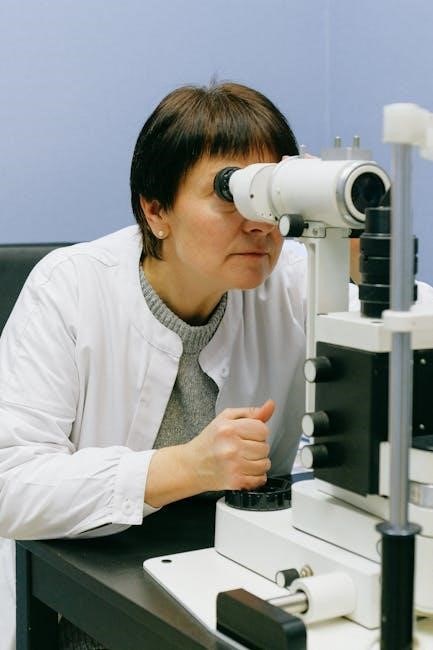
Proficiency in Ophthalmic Instruments and Equipment is crucial for COA certification, and practice tests thoroughly evaluate this skillset. Expect questions covering a wide array of tools, including keratometers, tonometers, autorefractors, and ophthalmoscopes.
Candidates must demonstrate understanding of the principles behind each instrument, proper usage techniques, and potential sources of error. Knowledge of sterilization procedures and equipment maintenance is also frequently assessed.
Practice tests often present scenarios requiring the selection of the appropriate instrument for a given clinical situation. Utilizing downloadable PDF study guides and simulated exams allows candidates to familiarize themselves with instrument identification and application, bolstering confidence and ensuring comprehensive preparation for the COA exam.
Vision and Refraction
Mastering Vision and Refraction is fundamental to the COA exam, and practice tests heavily emphasize this area. Expect questions assessing understanding of visual acuity, refractive errors (myopia, hyperopia, astigmatism), and the principles of refraction.
Candidates should be prepared to interpret Snellen charts, perform retinoscopy, and understand the components of a refraction prescription. Knowledge of common visual field defects and methods for their detection is also vital.
Practice tests often include calculations related to diopters and lens power. Leveraging free PDF resources and simulated exams provides opportunities to hone these skills, ensuring a strong grasp of vision and refraction concepts, ultimately leading to success on the COA certification exam.
Pharmacology in Ophthalmology

A significant portion of the COA exam assesses knowledge of Pharmacology in Ophthalmology, making dedicated practice crucial. Free PDF practice tests frequently include questions on common ophthalmic medications – their classifications, mechanisms of action, and potential side effects.

Candidates should familiarize themselves with drugs used to treat glaucoma, infections, inflammation, and dry eye. Understanding dosage forms, routes of administration, and patient counseling points are also essential.
Practice tests will likely present scenarios requiring the correct medication selection for specific conditions. Utilizing available resources, like downloadable study guides and exam questions, allows for focused review and reinforces understanding of ophthalmic pharmacology, boosting confidence and exam performance.
Taking a COA Practice Exam: Tips and Strategies
When utilizing free COA practice exams in PDF format, simulate real testing conditions for optimal benefit. Find a quiet environment, minimize distractions, and adhere to a strict time limit. Treat each practice test as a genuine exam to build stamina and reduce test anxiety.
Carefully read each question, paying attention to keywords and potential distractors. Don’t rush; allocate sufficient time for thoughtful consideration. If unsure, eliminate obviously incorrect answers before making an educated guess.
Review your answers thoroughly, even those you answered correctly, to reinforce understanding. Analyze your performance to identify weak areas and tailor your study plan accordingly. Remember, practice exams are diagnostic tools – use them strategically to maximize your COA exam success.
Time Management During the Exam
Effective time management is crucial when tackling the COA exam, and practice tests are ideal for honing this skill. Begin by allocating a specific time per question, mirroring the actual exam’s pace. During practice, consistently monitor your progress, noting questions that require more time.
If you encounter a particularly challenging question, don’t dwell on it excessively. Make an educated guess, mark it for review, and move on to ensure you complete all questions within the allotted time. Utilize the remaining time to revisit marked questions and refine your answers.
Practicing with timed PDF practice tests builds a sense of urgency and helps you develop a strategic approach to pacing yourself, ultimately maximizing your score on the official COA exam.
Understanding Question Formats

COA exam questions commonly appear in multiple-choice format, demanding a strong grasp of ophthalmic concepts and terminology. Free PDF practice tests are instrumental in familiarizing yourself with these question types. Pay close attention to how questions are phrased – some may include negative wording (“except” or “not”), requiring careful reading.
Practice tests expose you to various question styles, including those testing application of knowledge, clinical scenarios, and interpretation of data. Analyzing the rationale behind correct and incorrect answers in practice PDFs is key to understanding the exam’s logic.
By consistently working through diverse question formats, you’ll build confidence and improve your ability to quickly and accurately identify the correct response on the actual COA exam.
Analyzing Your Practice Test Results
Effectively utilizing free COA practice test PDFs requires thorough results analysis. Don’t simply check your score; meticulously review each question, regardless of whether you answered correctly. Identify patterns in your errors – are you consistently missing questions related to pharmacology, or struggling with ocular anatomy?
PDF practice tests often lack automated scoring, so manual review is crucial. Document your weak areas and the specific concepts causing difficulty. Compare your performance to the answer key and understand the reasoning behind the correct answers.
This detailed analysis forms the foundation for a targeted study plan, maximizing your learning efficiency and boosting your chances of success on the COA certification exam. Focus on strengthening those identified weaknesses.
Identifying Weak Areas
Utilizing free COA practice test PDFs effectively hinges on pinpointing your knowledge gaps. After completing a practice exam, meticulously categorize the topics where you consistently falter. Are questions concerning ophthalmic instruments proving challenging, or is pharmacology a stumbling block?
Review the questions you missed, noting the specific concepts tested. Do you struggle with understanding visual fields, or perhaps with calculations related to refraction? PDF formats allow for highlighting and annotation, making this process easier.
Consider the question formats that trip you up – multiple choice, true/false, or scenario-based. Recognizing these patterns allows you to concentrate your study efforts on the areas demanding the most attention, ultimately improving your COA exam performance.
Creating a Study Plan Based on Results
Once you’ve identified your weak areas using COA practice test PDFs, crafting a targeted study plan is crucial. Prioritize the topics where you consistently scored lowest, allocating more study time to those areas. Utilize the downloadable PDF study guides to reinforce foundational knowledge.

Incorporate a variety of study methods – reviewing notes, re-reading textbook chapters, and completing additional practice questions. Schedule dedicated study blocks, breaking down large topics into manageable segments. Don’t forget to include time for reviewing flashcards, focusing on key terms and concepts.
Regularly reassess your progress by taking additional practice tests. Adjust your study plan as needed, focusing on areas where you continue to struggle. A well-structured plan, informed by your practice test results, maximizes your chances of COA exam success.
Downloadable PDF Study Guides: What to Expect

When downloading COA practice test PDFs and study guides, anticipate a range of content designed to reinforce your understanding. Expect comprehensive coverage of key areas like ocular anatomy, ophthalmic instruments, vision science, and pharmacology. Many guides include multiple-choice questions mirroring the exam format, often with detailed explanations.
Look for PDFs offering simulated exams to assess your readiness under timed conditions. Some resources, like those found on Docsity and Stuvia US, provide graded questions and answers, offering valuable insights into your performance. Flashcards are frequently included, aiding in memorization of essential terminology.
However, always verify the source’s reliability to ensure accuracy and up-to-date information. These downloadable PDFs are powerful tools, but critical evaluation of their content is paramount for effective COA exam preparation.

Benefits of Using PDF Practice Tests
Utilizing COA practice tests in PDF format offers significant advantages for exam preparation. The portability of PDFs allows for studying anytime, anywhere – a crucial benefit for busy schedules. Instant access to a wealth of questions and study materials, sourced from platforms like Rice University’s Wiki and Stuvia US, accelerates learning.
PDFs facilitate offline access, eliminating reliance on internet connectivity. They often include detailed answer explanations, promoting deeper understanding of concepts. The ability to print materials caters to diverse learning preferences, and the cost-effectiveness of free resources is undeniable.
Furthermore, consistent practice with these tests builds confidence and familiarizes candidates with the exam’s structure, ultimately maximizing their chances of success. These resources are a cornerstone of effective COA exam preparation.
Ensuring PDF Source Reliability
When sourcing free COA practice tests in PDF format, verifying the reliability of the source is paramount. Not all online materials are created equal, and inaccurate information can hinder preparation. Prioritize resources from reputable institutions like Rice University’s Campus Wiki, known for academic integrity.
Cross-reference information with official COA exam guidelines and established ophthalmic resources. Be wary of sources with unclear authorship or outdated content – the provided date of November 24, 2025, is crucial for relevance. Check for consistent formatting and professional presentation, indicators of quality.
Utilize platforms like Docsity and Stuvia US with caution, reviewing user feedback and ratings. Always critically evaluate the material, ensuring it aligns with current ophthalmic practices and standards. Reliable sources contribute to effective and accurate exam preparation.
Simulated Exams and Their Value
Simulated COA exams, often available as downloadable PDFs or through online courses, are exceptionally valuable preparation tools. They replicate the exam environment, fostering familiarity with question formats and time constraints. Practicing under timed conditions builds crucial exam-taking stamina and reduces anxiety.
These exams provide a realistic assessment of current knowledge, pinpointing areas needing further study. Resources mentioned, like those offering “hundreds and hundreds of practice multiple choice questions,” emphasize the benefit of extensive practice. Analyzing performance on simulated exams reveals strengths and weaknesses.
The instant feedback offered by some platforms allows for immediate learning and correction. Utilizing these tools, alongside flashcards and study guides, maximizes preparation effectiveness. Ultimately, simulated exams bridge the gap between studying and successfully passing the COA certification.
Flashcards for COA Exam Preparation
Flashcards represent a highly effective, portable study method for COA exam preparation, readily complementing PDF practice tests. They facilitate memorization of key terms, ophthalmic instruments, anatomical structures, and pharmacological details – crucial components of the COA curriculum. Resources like those highlighted on Rice University’s Campus Wiki specifically mention flashcards as a valuable study aid.
Creating or utilizing pre-made flashcard sets allows for focused review of challenging concepts. This active recall technique strengthens retention and improves knowledge application. Digital flashcard platforms often include spaced repetition algorithms, optimizing learning efficiency.
Combining flashcard study with practice questions from downloadable PDFs creates a synergistic learning experience. Regular flashcard sessions reinforce foundational knowledge, while practice tests assess comprehension and identify areas needing further attention. Ultimately, flashcards are a versatile tool for mastering the COA exam content.
Expert Tips for Exam Success
Maximizing your COA exam performance extends beyond simply utilizing free PDF practice tests; strategic preparation is key. Prioritize consistent study habits, dedicating specific time slots for review and practice. Thoroughly analyze your results from practice exams, pinpointing weak areas for focused improvement.
Effective time management during the actual exam is crucial – practice pacing yourself during simulated tests. Understand the question formats commonly used, recognizing keywords and potential distractors. Don’t hesitate to utilize the process of elimination when unsure of an answer.
Leverage all available resources, including study guides and online courses offering practice tests. Remember to stay calm and confident during the exam, trusting in your preparation. Combining diligent study with smart test-taking strategies significantly increases your chances of success.